
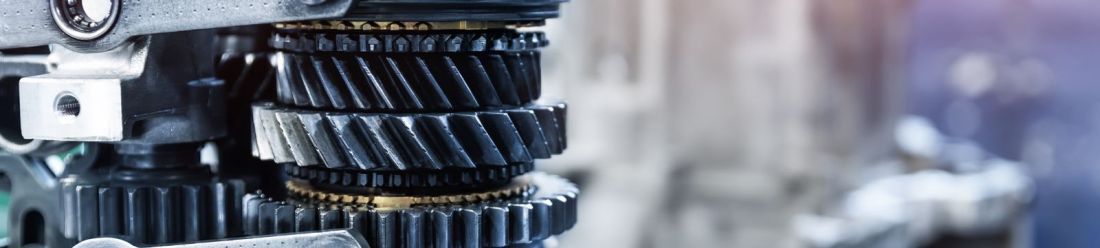
History of the Automatic Transmission
For many drivers in Devon and Cornwall, the ease of driving an automatic is now a top priority. While we often take the smooth shift of a modern gearbox for granted, the history of automatic cars is a fascinating story of engineering that spans over a century. From early air-powered prototypes to the sophisticated systems found in used cars today, the journey to clutch-free driving has been a long one.

How It All Began — The Origins of Automatic Transmission
In the early days of motoring, changing gears was a physical chore. Drivers had to master the timing of the clutch and the gear stick, which often led to grinding noises and stalled engines. The first attempts to simplify this process appeared as early as 1904, when the Sturtevant brothers in America created a ‘horseless carriage’ with a basic two-speed automatic gearbox. However, the technology was ahead of its time and the weights used to change gears often flew apart.
The history of automatic transmission took a more serious turn in 1921. A Canadian inventor named Alfred Horner Munro designed a system that used compressed air rather than hydraulic fluid. While his design removed the need for a manual clutch, it lacked power and never became a commercial success. These early pioneers proved that drivers wanted an easier way to travel, setting the stage for a revolution in the motor industry.

The First Automatic Transmission Car in the World
The breakthrough that changed everything arrived in 1939 with the Oldsmobile. Developed by General Motors, the ‘Hydra-Matic’ system was the first automatic transmission car in the world produced on a massive scale for the general public. It was a true hydraulic system that shifted gears automatically based on the car's speed and the pressure on the accelerator.
This new technology was an instant hit with motorists who were tired of constant shifting in traffic. By 1940, over 200,000 Oldsmobiles equipped with Hydra-Matic had been sold. It was marketed as a premium safety feature, allowing drivers to keep both hands on the wheel at all times. This success proved that the history of automatic cars was no longer just about experiments; it was the future of transport.
How Automatic Transmissions Developed Through the Decades
Following the Second World War, the adoption of automatic gearboxes moved at a rapid pace. During the 1940s and 50s, Cadillac and even luxury British brands like Rolls-Royce began using the Hydra-Matic system. In the United States, the automatic quickly became the standard choice for families and commuters alike.
By the 1960s and 70s, automatic cars started to become more common in European and Japanese models. While early versions were often criticised for using more fuel than manuals, engineers worked hard to improve efficiency. During the 1980s and 90s, the introduction of electronic controls meant that gear changes became much smoother. Most cars upgraded from three speeds to four, making motorway driving quieter and more economical.
Since the turn of the millennium, the technology has reached incredible new heights. Many modern vehicles now feature eight or even nine gears, alongside features like paddle shifters for a sportier feel. The history of automatic cars has moved from basic two-speed boxes to systems that are often more efficient and faster-shifting than any human driver could manage.

Types of Automatic Transmission — What’s the Difference?
When browsing for used cars today, you will likely come across several different types of automatic systems. Each has its own characteristics that affect how the car feels on the road.
Traditional Torque Converter: This is the most common type and is known for being incredibly smooth and reliable. It is the direct descendant of the early hydraulic systems.
Dual-Clutch Transmission (DCT): These use two clutches instead of one, with one clutch handling odd gears and the other handling even ones. This results in lightning-fast gear changes and is very popular in brands like Volkswagen and Ford.
Continuously Variable Transmission (CVT): Instead of traditional gears, a CVT uses a belt and pulley system. It provides a constant stream of power and is very efficient, though it can feel a bit different because you don't hear the engine shift in the usual way.
Automated Manual (AMT): This is essentially a manual gearbox where a computer operates the clutch for you. These are less common today but were popular in smaller city cars for a time.
Why So Many Drivers Are Choosing Automatic Cars Today
In recent years, the UK has seen a massive shift towards automatics. Driving through busy areas like Plymouth or navigating the A38 Devon Expressway is much more relaxing without a clutch pedal. For many, especially those who spend time in stop-start traffic, an automatic takes the stress out of the daily commute.
At Motor City Plymouth, the demand for these vehicles is clear. Almost 50% of the stock in our Plympton showroom consists of automatic cars. Whether you are a first-time buyer or a family looking for a reliable SUV, the modern automatic is a practical and popular choice. The history of automatic cars shows that while the technology has changed, the goal remains the same: making driving as easy and enjoyable as possible.

Frequently Asked Questions
What was the first automatic car ever made?
While there were early experiments in the early 1900s, the 1939 Oldsmobile with the Hydra-Matic transmission is widely recognised as the first mass-produced automatic car available to the public.
Are automatic cars more expensive to run than manuals?
In the past, automatics were less fuel-efficient, but modern technology has closed that gap. Many contemporary automatic gearboxes are now just as efficient, or sometimes even more so, than their manual counterparts.
Can you drive an automatic car on a manual licence in the UK?
Yes, if you hold a full UK manual driving licence, you are legally allowed to drive an automatic car. However, if you pass your test in an automatic, you are not permitted to drive a manual vehicle.
Are automatic cars better for learner drivers?
Many learners find automatics easier because they don't have to worry about clutch control or stalling. This allows them to focus more on the road and their surroundings, often making the learning process faster.
If you are ready to find your next vehicle, you can browse a wide range of used cars online today. For more information or to book a test drive, please visit our contact page to speak with the friendly team at Motor City Plymouth.